
Active Warrants in Butler County
A warrant is a court or judge's order tied to a person. In Butler County, warrants appear across several systems: Common Pleas criminal dockets, Area and Municipal Court dockets, the Sheriff's Most Wanted page, and the jail roster's arrest and charge fields. There is no dedicated public form that lists every active warrant. The pages that are public show different slices of the same picture.
There is a practical reason for the split. A public, searchable list of every open warrant could tip off the people the courts want to bring in, so most warrant data stays in the case file or with law enforcement. What is public, the docket entries and the Most Wanted page, still gives a useful path. Pair them with the jail roster and a phone call, and you can usually confirm whether a warrant is active.
The Sheriff publishes a Most Wanted page for specific cases.
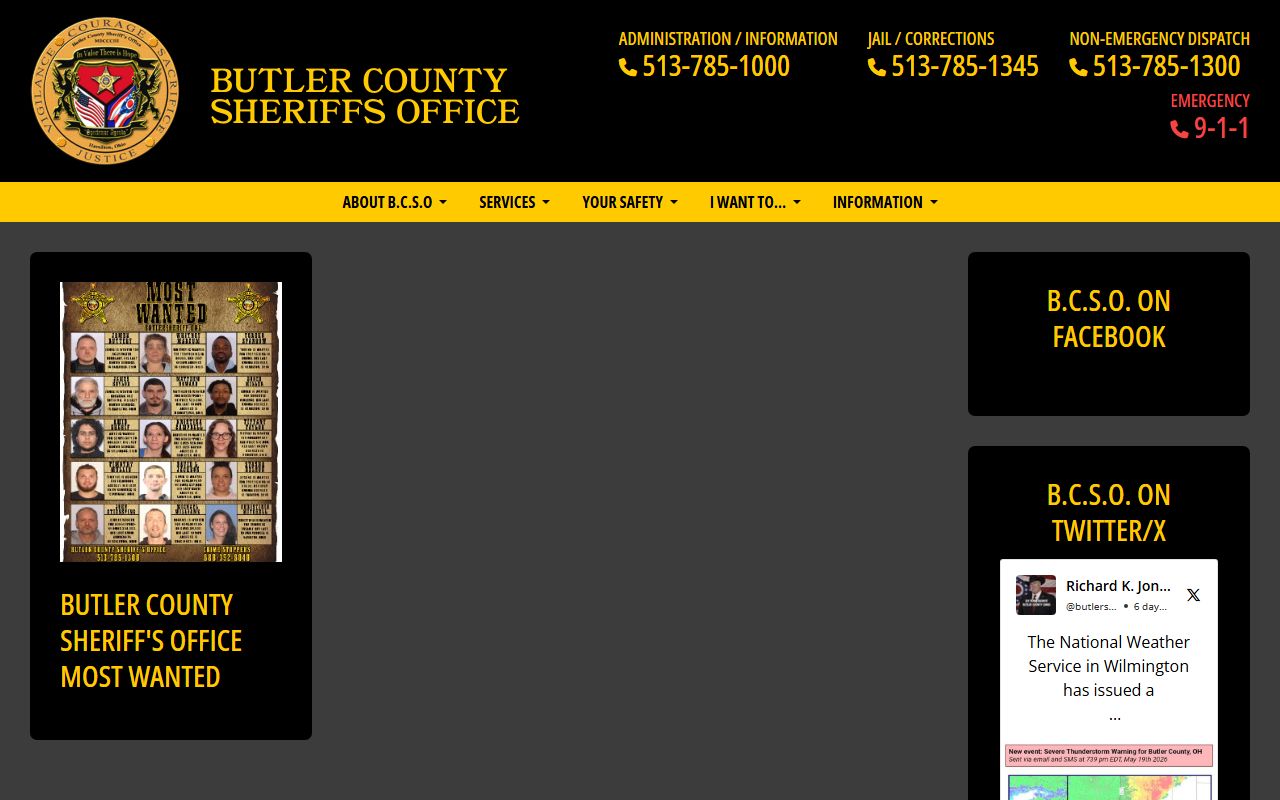
The Most Wanted page is a public listing, and its content changes as cases resolve. It is not a full warrant index, so a name missing from it does not mean a person is clear.
Types of Warrants in Butler County
Warrants come in several forms, and the type tells you which court issued it and why. Knowing the type helps you find the right office to call.
- Arrest warrant - issued to arrest a person for a criminal charge.
- Bench warrant - issued by a judge, often after a missed court date.
- Capias - the Ohio term often used for failure to appear or failure to comply.
- Search warrant - authorizes a search; often sealed during an investigation.
- Fugitive warrant - based on a charge from another jurisdiction.
- Probation warrant - issued for a violation of supervision terms.
A civil body attachment can also occur in contempt or support cases, which is why some warrants trace back to Domestic Relations rather than a criminal court.
Bench Warrants and Capias in Butler County
Two warrant types come up most often in everyday cases: the bench warrant and the capias. A bench warrant is issued from the bench, meaning by the judge, usually when a person fails to appear for a scheduled hearing. A capias is the Ohio term used widely for an order to arrest after a failure to appear or a failure to comply with a court order. Both attach to an existing case rather than starting a new criminal investigation.
These show up as docket entries on the case. If you read a docket and see "capias," "bench warrant," or "failure to appear," the case has an open issue that will not go away on its own. The longer a capias sits, the more likely it adds a license block, a higher bond, or a second charge. A quick call to the clerk usually confirms whether the entry is still active or has already been recalled.
Probation and community-control warrants follow the same idea. When a person violates supervision terms, the court can issue a warrant that brings them back before the judge who set the conditions.
How to Search Butler County Warrants
Because there is no single warrant portal, a thorough check moves through a few steps. Start with the court most likely to have issued the order, then confirm custody and review the public Most Wanted listing. Never rely only on stale web data when a warrant could lead to an arrest.
- Search the relevant court docket by name or case number for warrant or capias entries.
- Check the jail roster to see if the person is already in custody.
- Review the Sheriff's Most Wanted page for public listings.
- Call the court clerk or the Sheriff's Office to verify status.
- If the warrant is yours, speak with an attorney or the issuing court before appearing.
The court docket is the most reliable record, since a capias or bench warrant shows up there as a dated entry on the case. The court dockets page explains how to read those entries.
Butler County Warrant Search Fields
The public tools that touch warrant data each use their own inputs. The Most Wanted page is a browse-only list. The jail roster searches by name. The court dockets search by name or case number. There is no warrant-only search form, so use these together.
| Source | Input | What It Returns |
|---|---|---|
| Sheriff Most Wanted | Browse the page | Publicized wanted listings, subject to change |
| Jail roster (Last / First) | Name search | People currently in custody, not all warrants |
| Court docket | Name or case number | Warrant or capias entries on the case |
| Crime tip | Text COPS and tip to 274637 | An anonymous tip channel, not a search |
Note: a name missing from these public tools does not confirm that no warrant exists, since many warrants are not posted publicly.
What a Butler County Warrant Record Shows
When a warrant is public, whether on Most Wanted or as a docket entry, it carries a predictable set of details. A docket-linked warrant ties back to a case number, which makes it easy to confirm with the issuing court.
| Field | What It Shows |
|---|---|
| Name and Photo | The subject's name, plus a photo on a Most Wanted listing |
| Charge / Offense | The alleged offense behind the warrant |
| Court / Case Number | The issuing court and case, when docket-linked |
| Issue Date | When the warrant or capias was issued |
| Bond | The bond amount or a no-bond status, where public |
| Disposition | Whether the warrant was served, recalled, or satisfied |
Sealed indictments and search warrants are not public until they are unsealed or served.
What to Do If You Have an Outstanding Warrant
Do not ignore a warrant. A missed court date can lead to a license suspension, a bond forfeiture, or new charges on top of the original case. The safest path is to act early and on your own terms rather than being arrested.
- Identify the issuing court from the case or citation.
- Call the clerk or an attorney to confirm the status and any bond.
- Arrange to appear, post bond, or file a motion to recall where appropriate.
- Get written confirmation that the warrant or capias was recalled or satisfied.
An attorney can often resolve a bench warrant for a missed date without a surprise arrest, especially when the underlying case is minor.
Bond and Court Appearance After a Warrant
Resolving a warrant usually means dealing with bond and a court date. Bond is money or a set of conditions that secure a person's appearance. A recognizance bond releases a person on a promise to appear, while a surety bond uses a bond company or third party as a guarantee. When a warrant is recalled, the court often sets a new hearing and may set or adjust bond at the same time.
If the warrant came from a missed traffic or misdemeanor date, the matter may be handled in an Area or Municipal Court. A felony warrant routes through Common Pleas. Confirm the bond amount and the court before you go, and bring a photo ID and any paperwork tied to the case. Posting bond or appearing voluntarily generally looks better to the court than waiting to be picked up.
Keep proof. Ask for written confirmation once a warrant or capias is recalled or satisfied, so a stale entry in a database does not cause a problem later.
Tips, VINE, and Victim Services
The Sheriff supports a few channels around warrants and safety. You can text the keyword COPS and a tip to 274637 to share information anonymously. The Sheriff's Victim Assistance Program helps victims stay notified and enforce their rights in the Area Courts.
That program also helps victims register for VINE custody notifications.
The Victim Assistance page covers Marsy's Law rights, VINE registration, and court accompaniment. For release alerts, the released inmates page explains VINELink in full. Advocates from the program attend court proceedings on weekdays and help victims stay notified about a defendant's status, which can matter when a warrant is served and a person is brought back into custody.
Restricted Butler County Warrant Records
Some warrants stay out of public view. Sealed indictments and search warrants are not public until they are unsealed or served. Juvenile warrants are restricted. Active investigative details may be withheld so an investigation is not compromised. The Sheriff also keeps related public-record categories, such as sex offender information and firearm-related records.
The Sheriff's sex offender page links to offender notifications for the county.
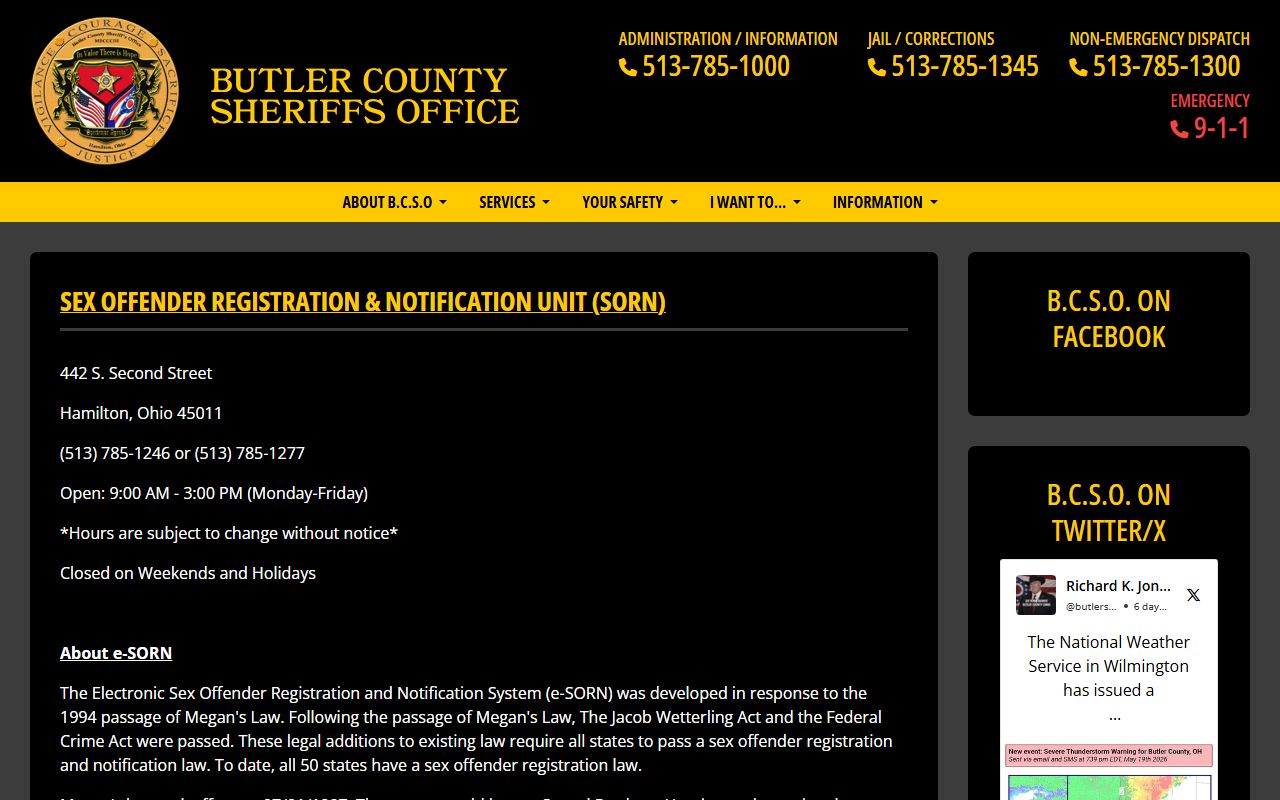
Visit the Sheriff's sex offender information page for registry notifications. Firearm records also intersect with court orders, since some convictions carry a weapons disability.
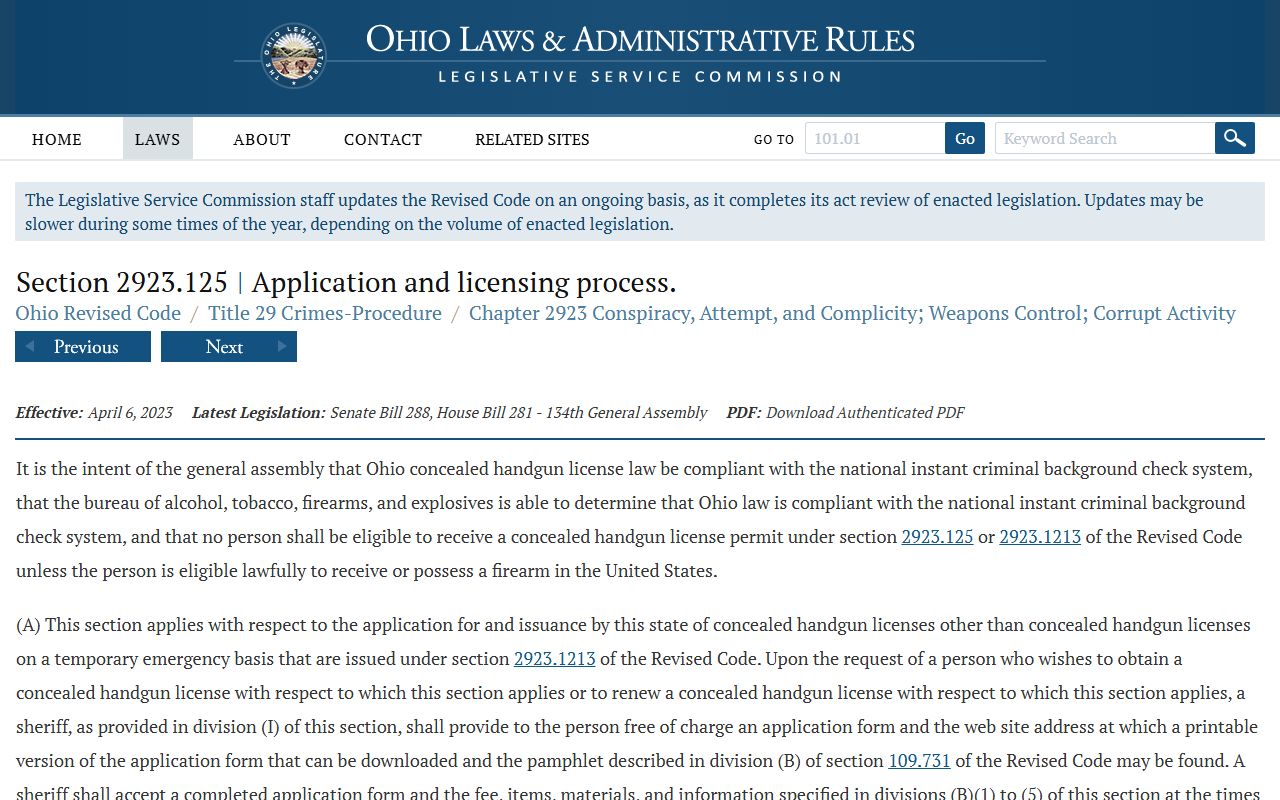
The concealed handgun license rules under ORC 2923.125 show how a criminal case can affect a license, which is one reason a warrant or conviction reaches beyond the courtroom.