
Arrest Records in Butler County
An arrest record starts at booking. When the Butler County Sheriff's Office books a person into the Corrections Center at 705 Hanover Street, it records the name, the booking date, the booking number, the arresting agency, and the charges. That booking data feeds the public jail roster. The arrest record is an early snapshot. It reflects what police alleged at the time, before a prosecutor reviews, amends, or drops a charge.
Arrest records are not the same as the criminal court record. The court file tracks the case after charges are filed, through arraignment, plea, trial, and sentencing. The Sheriff also keeps incident and offense reports, which are agency records, not court records. For the full case history, the court docket is the right source, and the Butler County court records page explains how to pull it.
How to Search Butler County Arrest Records
Start with the jail roster at butler.miamivalleyjails.org, the Persons Currently in Custody portal. It lists people held in the listed Butler County jail. You can search by last and first name or browse A-Z by last name, and a security check appears before browsing results. The roster shows current custody only. If a person is no longer listed, they may have been released, transferred, or never held in a Butler County facility.
For an arrest that led to charges, also check the court docket through the Clerk of Courts or the Area Courts. To request a Sheriff incident or offense report, use the request-record page.
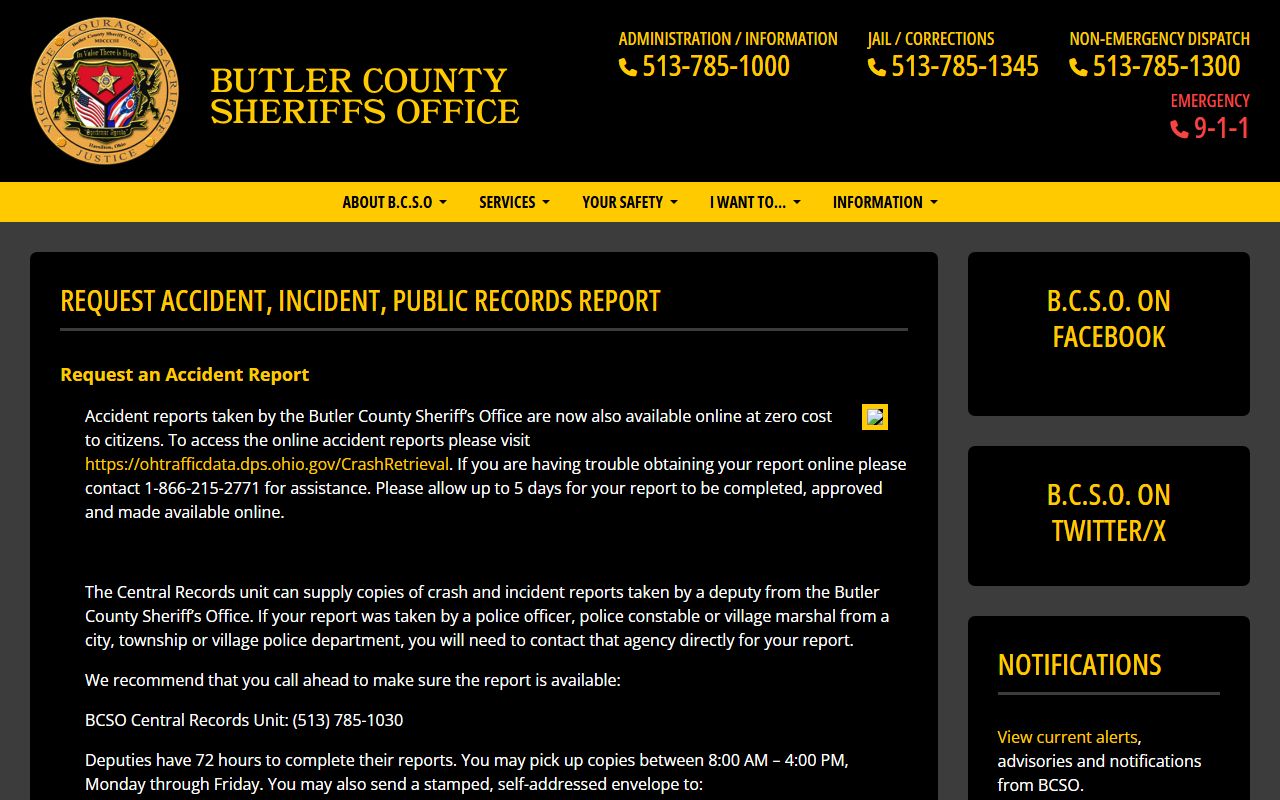
The Sheriff's request-record page explains that Central Records can provide reports taken by Sheriff's deputies, while reports taken by a city police department must be requested from that agency. Incident and offense reports are free; a traffic crash report copy costs $4 in cash at the office.
Plan for a short wait on reports. Deputies have 72 hours to complete a report, so a very recent arrest may not have a finished report yet. Central Records can be reached at (513) 785-1030, and copies are picked up Monday through Friday during business hours or requested by mail with a stamped, self-addressed envelope. Calling ahead to confirm the report is ready saves a trip.
What a Butler County Arrest Record Shows
A jail booking profile holds more than a name. When the roster shows a detailed listing, it can include identity, custody, and charge data drawn from the booking. Treat each field as a starting point, since the charge data reflects the arrest and not the final court outcome.
| Field | What It Shows |
|---|---|
| Name and Booking Photo | Full name and the mugshot taken at intake |
| Booking Date and Number | When the person was booked and the jail's case number |
| Arresting Agency | The Sheriff or the local department that made the arrest |
| Charges | Charge description, degree, and status at booking |
| Bond | Bail amount or a no-bond hold, where public |
| Next Court Date | The scheduled hearing, if listed |
The roster suppresses Social Security numbers and protected juvenile data. A federal or ICE hold may also appear, in which case the court shown is not a Butler County court.
Arrest Records vs. Criminal Court Records
These two records answer different questions. An arrest record says a person was taken into custody. A criminal court record says what happened to the charge in court. People often need both, but they come from different offices and update on different clocks.
| Arrest Record | Criminal Court Record | |
|---|---|---|
| Source | Sheriff jail roster and reports | Clerk of Courts or Area Court docket |
| Shows | Booking, charges at arrest, custody status | Filed charges, plea, disposition, sentence |
| Updates | Often, every 30 minutes on the roster | Can lag a filing by at least 24 hours |
| Final? | No, charges may change | Yes, once the case is disposed |
The roster charge can reflect booking before an indictment, an amendment, a dismissal, or a plea, so cross-check the court docket for the final outcome.
A felony arrest in Butler County often follows a path. The case may begin with an appearance in an Area Court, then move to Common Pleas after a grand jury indictment. The flow runs: arrest and booking › initial appearance › indictment › Common Pleas arraignment › plea or trial › sentencing. A misdemeanor may stay in an Area or Municipal Court the whole way through.
Charges vs. Convictions
This difference matters more than any other. A charge is an accusation. A conviction is a court finding of guilt after a plea or a trial. A person can be arrested and charged, then have the charge dropped, amended, or found not guilty. Treating a charge as proof of guilt is both unfair and, for many uses, against the law.
| Charge | Conviction | |
|---|---|---|
| Meaning | An accusation filed by the state | A court finding of guilt |
| Stage | Arrest and arraignment | After plea or trial |
| Can change? | Yes, by dismissal or amendment | May be appealed or, later, sealed |
For a reliable result, read the disposition on the court docket, not the booking charge on the roster.
Sealed vs. Expunged Records in Butler County
Ohio treats sealing and expungement as two different things. Sealing limits public access and treats the case as though it did not occur for many purposes, though some government agencies may still inspect a sealed file. Expungement goes further and can require deletion or destruction of the record for eligible cases. Both run under ORC Chapter 2953 for adults, and you file in the court that handled the case.
Chapter 2953 sets the eligibility, waiting periods, and exclusions.
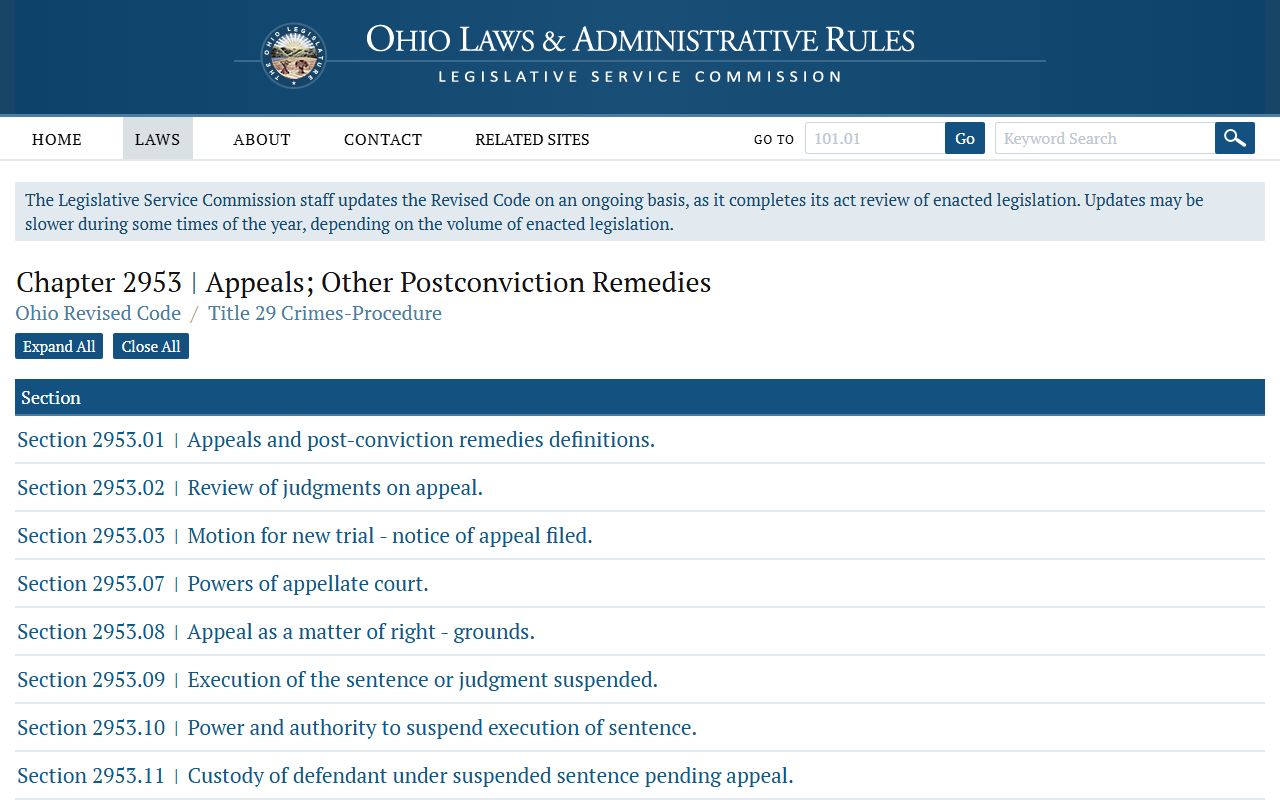
Read ORC Chapter 2953 for the full framework. The prosecutor may object, and the court weighs eligibility, rehabilitation, and the government's need to keep records. Common Pleas handles felony sealing, while the Area and Municipal Courts handle many misdemeanor and traffic cases.
| Sealed | Expunged | |
|---|---|---|
| Effect | Hidden from most public access | Deleted or destroyed for eligible cases |
| Who can still see it | Certain government agencies | Far fewer, by statute |
| Where to file | The court that handled the case | The court that handled the case |
Mugshots and Booking Photos
A booking photo, or mugshot, is taken at intake and may appear on a detailed jail profile when the roster shows it. A mugshot reflects an arrest, not a conviction, and it can stay online long after a case ends. Third-party mugshot sites often repost these images and may keep them up even after a charge is dropped or a record is sealed.
The official jail roster is the accurate source. If a record is sealed or the person is released, rely on the court docket and the Sheriff, not a private repost. Booking photos of juveniles and protected individuals are not public in the same way as adult bookings. If a private site refuses to take down a photo from a dismissed or sealed case, the court order is what carries legal weight, and the official roster will already reflect the change.
Statewide and Federal Criminal Records
County tools cover Butler County, but a person's history can reach beyond it. Ohio prison custody and post-release control are tracked by the Ohio Department of Rehabilitation and Correction, which runs an offender search. Federal custody is tracked by the Bureau of Prisons inmate locator. The Ohio Attorney General maintains the sex offender registry. For an official background check, Ohio uses a BCI process through the Attorney General, which is separate from a casual roster search.
The released inmates page covers the state and federal locators in detail, including links to each search tool. For active wanted listings, see the warrant records page.
Background Check Considerations
A roster or docket search is not a legal background check. Under the federal Fair Credit Reporting Act, arrest and court data cannot be used for credit, employment, tenant, or insurance decisions through a private site like this one. Employers and landlords must use a compliant process. For the person who is the subject of the record, the most reliable approach is to pull the official court docket and confirm the disposition.
If a past case is creating problems, free help is available. Ohio Legal Help and the Butler County Public Defender offer guidance for qualifying residents.
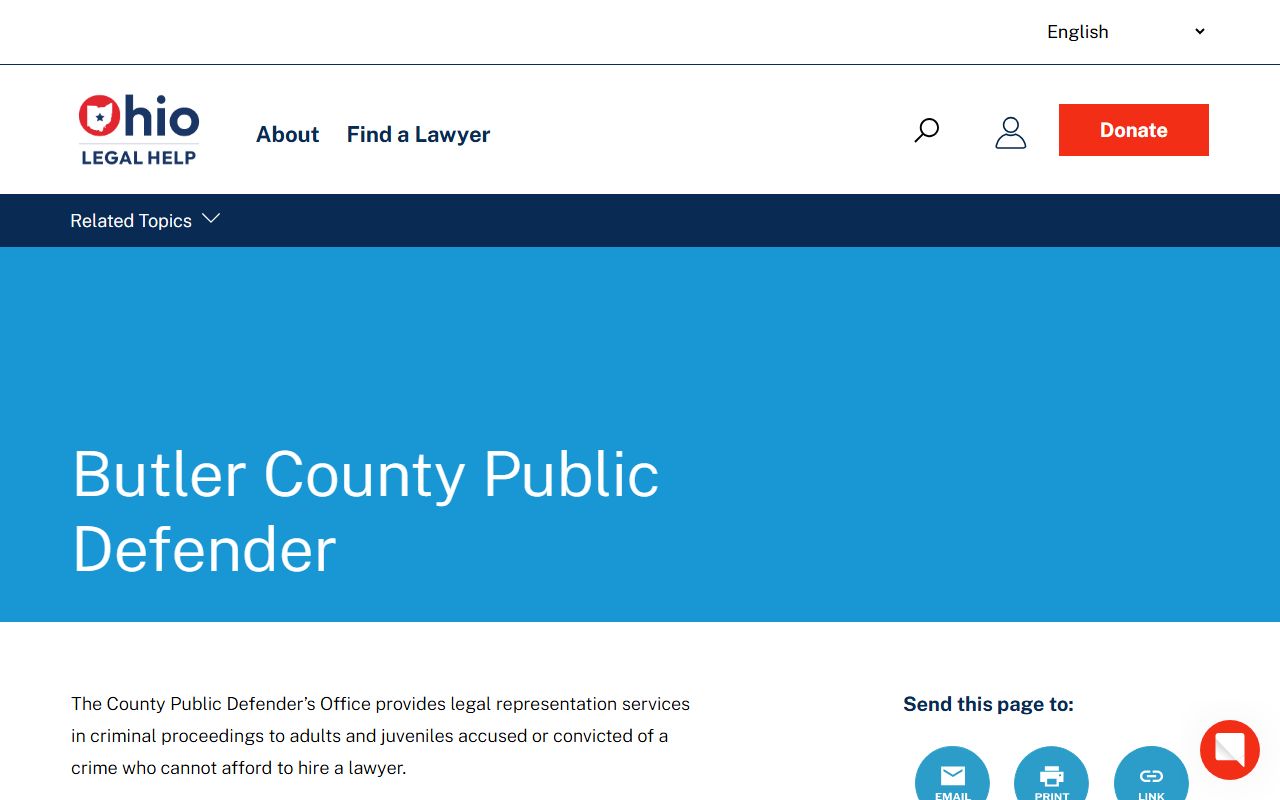
The Ohio Legal Help listing for the Butler County Public Defender explains who qualifies for appointed counsel and how to apply through the court.
Restricted Criminal Records in Butler County
Some criminal records are closed by law. Juvenile records are largely protected under ORC 2151.14, and juvenile sealing and expungement run under ORC 2151.356. Sealed and expunged adult cases drop out of public search. The Sheriff also redacts certain data: its records page states that any report listing an uncharged suspect will redact that suspect under ORC 149.43(A)(2)(a).
Juvenile sealing follows its own statute and process.
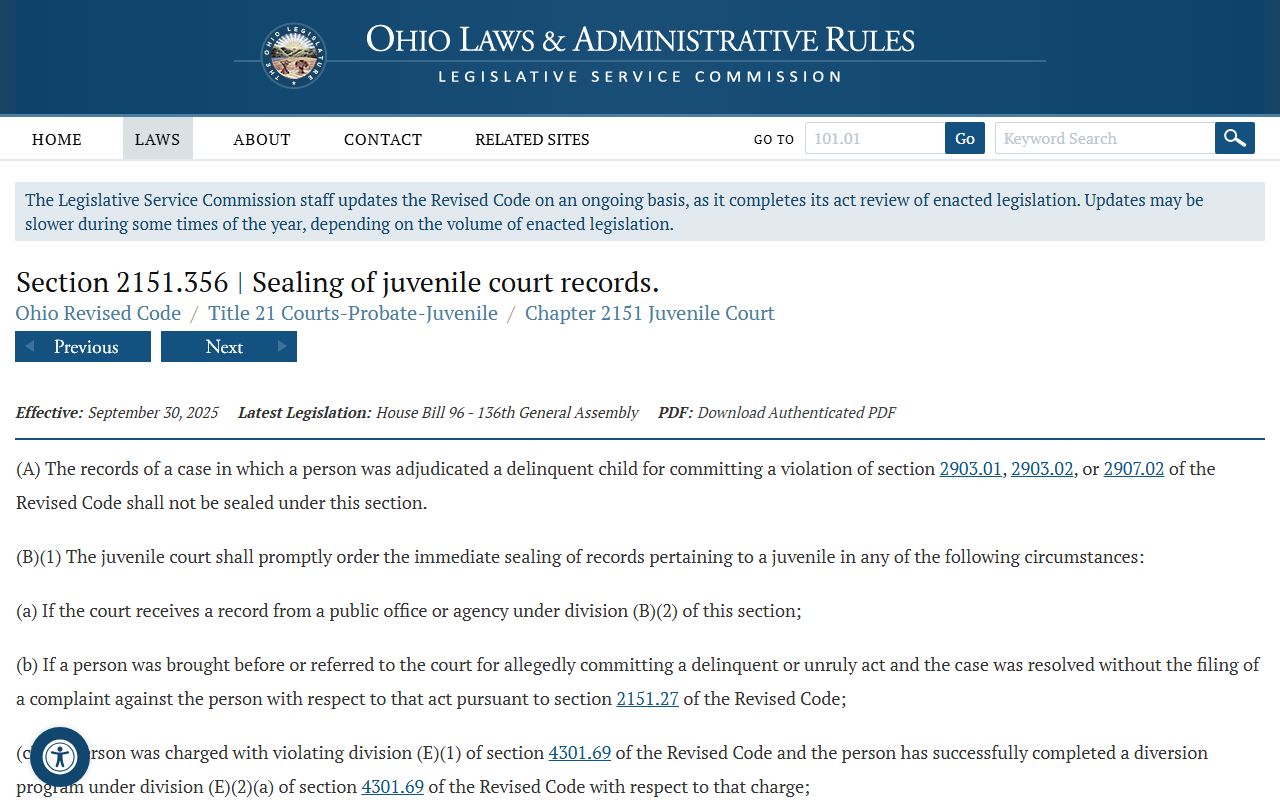
Read ORC 2151.356 for the juvenile process, and contact Juvenile Court for access rules. For the link between DUI and criminal cases, see the traffic court records page.