
How to Search Butler County Traffic Court Records
Read the citation first. It names the court that has the case, and that tells you where to search. Most county-court traffic cases run through the Butler County Area Courts CaseLook at docket.bcohio.gov. Cases inside Hamilton or Middletown go to those municipal courts instead. The Area Courts system shows a disclaimer first and warns that posting can lag a filing by at least 24 hours.
| Field Label | Type | Required | Notes |
|---|---|---|---|
| Disclaimer / Continue | Button | Yes | Accept before the search form loads |
| Ticket Number | Text | No | Best field for a citation lookup |
| Name | Text | No | Use if the ticket number is unknown |
| Case Number | Text | No | Use if the court case number is known |
| File Date | Date | No | Narrows a date-based search |
| Begin Search | Button | n/a | Runs the query |
Search by one piece of information at a time, since CaseLook generally does not combine fields.
Which Courts Handle Traffic Cases in Butler County
Traffic jurisdiction in Butler County is divided. The county Area Courts handle county-court traffic, misdemeanor traffic, and minor misdemeanors outside the cities. The Hamilton and Middletown Municipal Courts handle traffic inside their city limits. The Court of Common Pleas General Division handles felony traffic crimes, such as a felony OVI or a vehicular offense charged as a felony. Juvenile Court handles juvenile traffic cases routed to its jurisdiction.
Juvenile traffic is treated differently from adult cases.
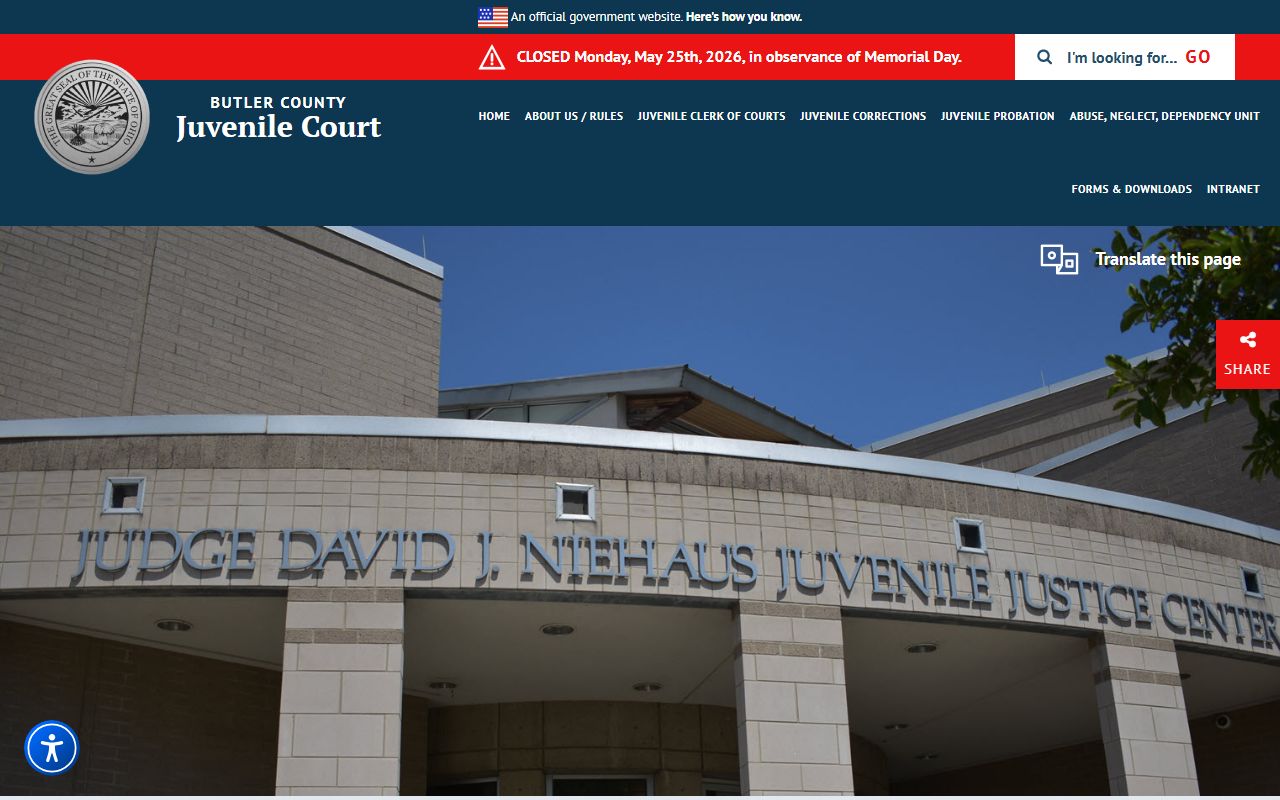
The Juvenile Court handles traffic cases for minors, and those may not appear in the adult public search systems. The Court of Common Pleas page explains how a serious traffic crime can move up to the trial court.
Types of Traffic Cases on Record
Traffic cases range from a parking ticket to a felony. The degree drives the consequences and the court. Many minor cases can be paid without an appearance, while serious ones require one.
- Minor misdemeanors, such as many speeding tickets.
- Moving violations and non-moving violations.
- Driving under suspension and license-related offenses.
- OVI / DUI, which can be a misdemeanor or a felony.
- Felony traffic crimes, which route to Common Pleas.
A commercial driver, or a person facing OVI or driving under suspension, should treat the case as more than a routine ticket, since the stakes are higher.
What Butler County Traffic Court Records Show
A traffic court record is the case file for the citation. It tracks the charge, the court process, and the outcome, plus any fines and warrants. Read the disposition to see how the case ended.
| Field | What It Shows |
|---|---|
| Ticket / Citation Number | The citation identifier from the stop |
| Charge and Code Section | The offense and the Revised Code or ordinance cited |
| Court Date | The scheduled appearance, if required |
| Plea and Disposition | Guilty, no contest, dismissed, amended, or not guilty |
| Fine, Costs, and Balance | Amounts owed and any payment plan |
| Warrant / Capias | A failure-to-appear or failure-to-pay entry, if any |
Note: a paid waiverable ticket may close the court case but still create an entry on the BMV driver record.
Searching by Citation Number vs by Name
The ticket number is usually the best search key. It points to a single case and avoids the same-name false positives a name search can produce. If you do not have the ticket, a name search still works, though it may return more than one match. A case number, if you have it, is just as precise as the ticket number.
For older or paid cases, try a broad date range, then contact the court if nothing shows. If a court date was missed, look for a "capias," a "bench warrant," or a "failure to appear" entry, since those signal an active problem that the warrant records page explains how to resolve.
Paying or Contesting a Butler County Traffic Ticket
Whether to pay or contest depends on the charge and its consequences. Some tickets are waiverable and can be paid without a court date, while others require a mandatory appearance. Use only the court's official payment method.
- Read the court name on the citation and find that court's system.
- Search by ticket number or name to open the case.
- Check whether the charge is waiverable or requires an appearance.
- To pay, use the court's official payment method only.
- To contest, enter a not-guilty plea by the deadline and attend the hearing.
- Bring proof such as insurance, license, or repair receipts if the charge allows it.
Confirm whether points, a suspension, or insurance effects may follow even after you pay, since paying does not always end the consequences.
Public Access Laws for Traffic Court Records
Adult traffic dockets are court records under the Supreme Court of Ohio's Rules of Superintendence, Sup.R. 44 through 47, unless they are sealed or otherwise restricted. Agency crash reports are public records under the Public Records Act, ORC 149.43, subject to law-enforcement redactions. BMV driver records are state motor-vehicle records, and access to them is controlled by state process and use limits.
So a traffic case file, a crash report, and a driver record follow three different access rules. The public records page covers the agency side, while the court file follows the same rules as other Butler County court records.
Court Traffic Records vs State Driver Records
This is the distinction that trips up most people. The court traffic record is the citation case. The BMV driver record is the state licensing file. They serve different purposes and live in different offices.
| Topic | Court Traffic Record | Ohio BMV Driver Record |
|---|---|---|
| Custodian | Area, municipal, or common pleas court | Ohio Bureau of Motor Vehicles |
| Purpose | Resolves the citation and court penalties | Tracks license status, points, suspensions |
| Search | Name, case, or ticket number in CaseLook | Driver identity through BMV online services |
| Certified by | The court clerk | A BMV record product |
The BMV runs its own online services for driver records.
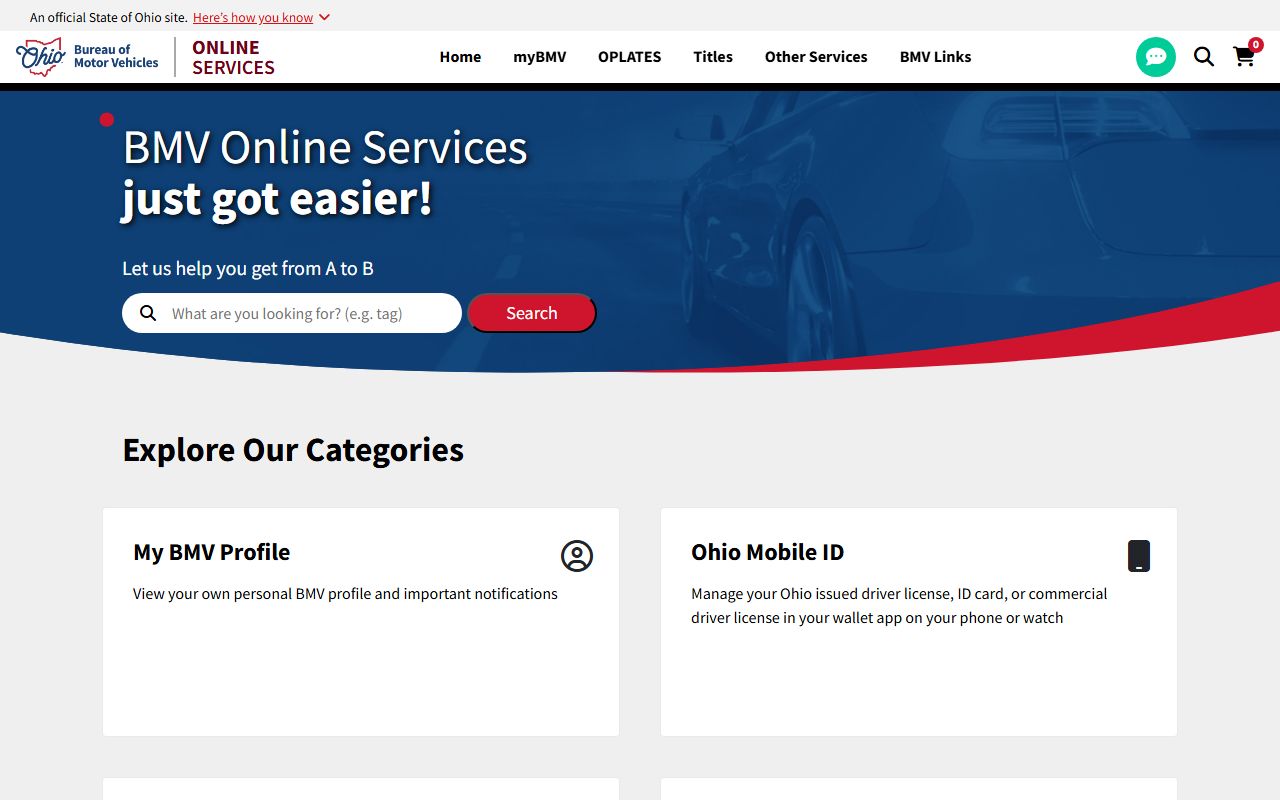
Reach driver-record services through Ohio BMV online. Paying or contesting a ticket happens in court, while license consequences are administered by the BMV.
CDL and Commercial Driver Records
Commercial driver's license holders face stricter rules. Federal and state CDL reporting can turn a seemingly minor traffic outcome into a career problem, and the usual fixes may not apply. A CDL holder should not assume traffic school, a deferral, or an amendment is available, since those options can be limited for commercial drivers.
Before paying or pleading on a ticket, a CDL holder should understand how the outcome reports to the driver record and to employers. What looks like a quick payment can carry consequences that an ordinary license would not.
DUI / DWI Cases
OVI, Ohio's term for impaired driving, can be a misdemeanor or a felony depending on the circumstances and prior history. A felony OVI routes to the Court of Common Pleas, while a misdemeanor OVI stays in an Area or municipal court. These cases carry criminal consequences beyond an ordinary traffic ticket, including possible jail, license action, and a criminal record.
Because OVI crosses into criminal court, the arrest records page covers the booking and criminal-case side. Driving under suspension, leaving the scene, and vehicular offenses can also move beyond routine traffic.
Deferred Adjudication and Defensive Driving
Some courts offer options that reduce the impact of a ticket, such as a defensive driving or remedial course that can affect points, where allowed. Availability depends on the court, the charge, and the driver's history. A CDL holder, again, may not qualify for the same options as a regular license holder.
Ask the court that holds the case what is available before assuming a course or deferral will apply. Paying a waiverable ticket may close the case but still place a conviction on the BMV driver record, so a course-based option can be worth asking about.
Sealing or Expunging Traffic Records
Some traffic-related records can be sealed, and others cannot. Sealing and expungement run under ORC Chapter 2953 for adults, and you file in the court that handled the case. Certain serious offenses are excluded from sealing by statute.
The statute identifies records that are not eligible.
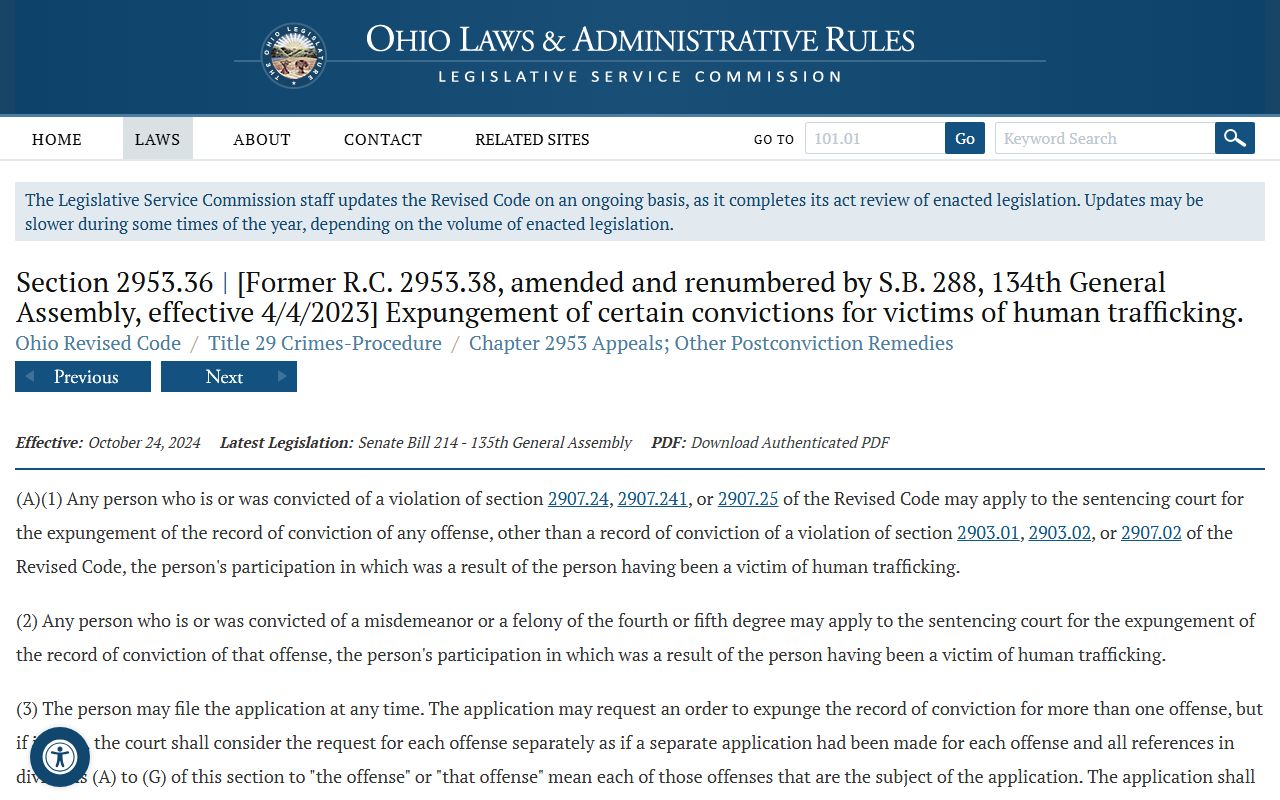
ORC 2953.36 lists records that may not be sealed under certain provisions. For the full sealing process, see the arrest records page.
Fees for Traffic Record Copies
Fees vary by record and office. Court copy fees are set by statute, while a crash report has its own cost. Online docket views are free. Confirm the current amount with the court or agency before you order.
| Item | Amount |
|---|---|
| Online traffic docket view | Free |
| Online crash report (Ohio DPS portal) | No cost |
| Sheriff traffic crash report (office copy) | $4.00, cash only |
| Court copies / certified copies | Set by court statute; confirm at the counter |
| BMV driver record | State BMV product; fee may apply |
The Sheriff says accident reports are available online at no cost through the Ohio DPS crash retrieval portal, with up to five days to complete and approve a report.